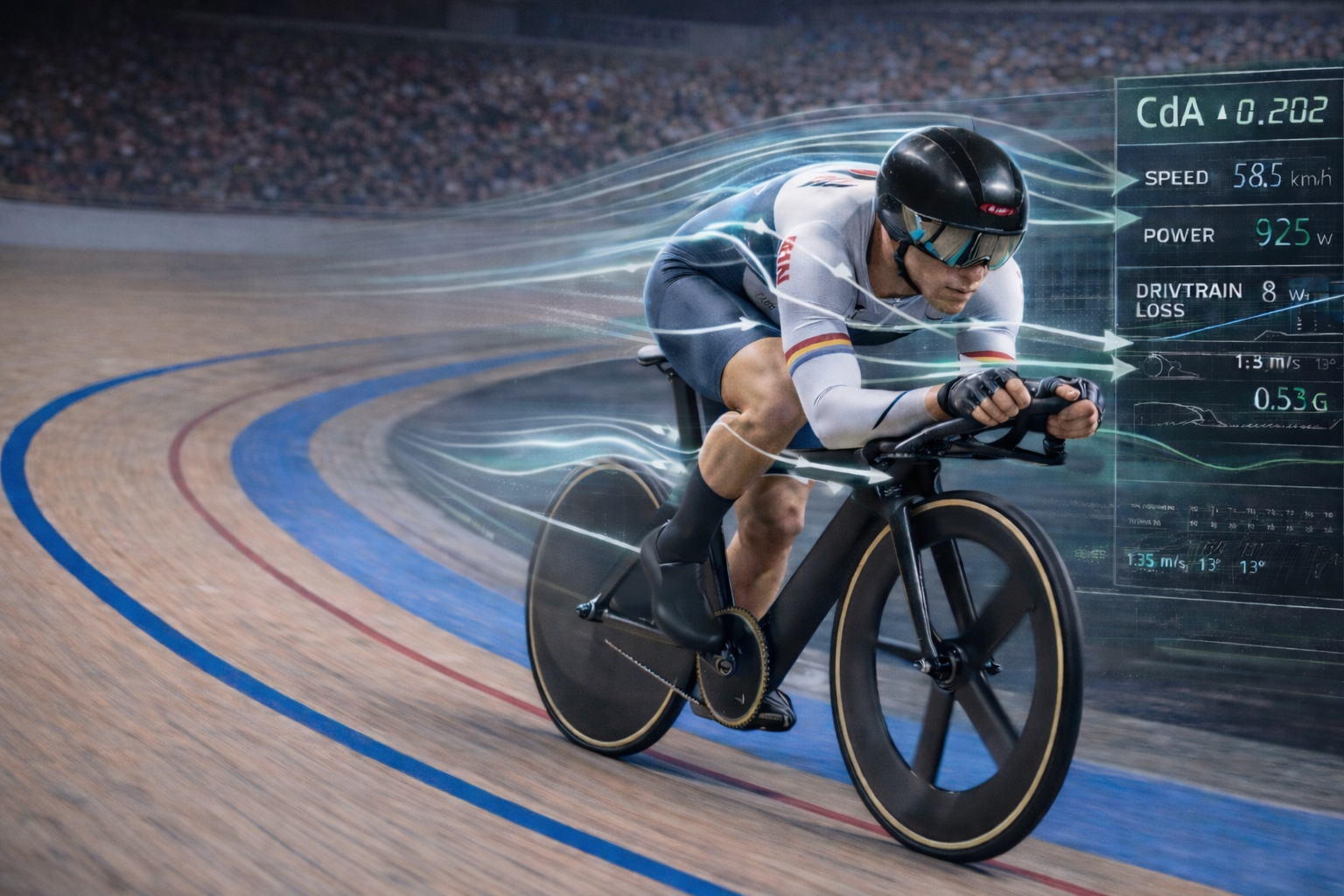
The modern track rider does not arrive at camp alone.
They arrive with a road season in their legs, a private coach in their ear, a wearable on their wrist, a sponsor on their back, a selection policy above them and an Olympic ambition trying to hold the whole thing together.
Some bring fatigue the national programme did not create. Some bring confidence it did not build. Some bring data no one else has seen. Some bring a half-resolved injury, a road-team priority, a gym programme from elsewhere, or a private view of what they need that does not quite match the national plan.
None of that means they are less committed, it means more systems now have a claim on the same body.
Track cycling has not always dealt with this well. Too often the conversation slips into complaint. Road teams want too much. Federations need more time. Private coaches complicate the message. Riders are not available enough. The calendar is too crowded. Everyone can be right and the athlete can still end up carrying the mess.
The advantage now sits with the programme that learns to share the rider without making the rider carry the cost.
The best cycling environments already understand something important. Riders are not always weakened by moving across more than one discipline, more than one environment or more than one competitive identity. In the right structure, they can become broader, sharper and more durable because of it.
The biggest marginal gain may not be bringing every rider back under total federation control.
It may be learning how to share the rider better than everyone else.
The shared rider is not a problem to be wished away. They are the reality track cycling now has to organise around.
Stop Fighting The Future
Ten years ago the national system gathered the athlete, shaped the athlete, prepared the athlete and selected the athlete. It controlled the camps, the testing, the coaching voice, the race programme and the final call. That was never perfectly true, but it was true enough to form the culture around it.
Today, the road team is not disappearing. Private coaches are not disappearing. Wearables are not disappearing. Riders are not returning to a cleaner world where every meaningful input sits inside one federation pathway.
Nor should they necessarily want to.
A rider can be improved by several systems. They can also be exhausted by them. The difference is whether those systems know how to behave around the same athlete.
The Rider Should Not Carry The Conflict
Everyone says they want what is best for the athlete. The road team wants them successful. The national federation wants them ready. The private coach wants them understood. The sponsor wants them visible.
The rider just wants results but they become the person carrying the conflict.
They translate between coaches. They soften messages. They decide which data to share. They manage road expectations in track camp and track expectations on the road. They try to keep everyone reassured while privately knowing the plans do not quite line up.
That is not high performance, it is conflict management disguised as professionalism.
A rider should not be chairing the meeting between the people who influence their body. They should not have to choose which party gets the honest version of fatigue. They should not have to decide whether sharing a poor recovery score will cost them trust. They should not have to carry disagreement between systems that could have spoken to each other sooner.
The parents are not getting back together. The work now is to stop the rider feeling like the child in the middle.
When that does not happen, everyone pays. The rider loses clarity. The coach loses truth. The road team loses trust. The federation loses the full picture. The performance loses precision.
Track cycling is too exact for that kind of leakage.
Priority Windows, Not Complaints
Road and track do not need to pretend they want the same thing every week.
A road team may need visibility, race days, sponsor value and a rider who can perform across a long season. A track programme may need controlled blocks, position work, partnership time, repeated starts, testing windows, gym rhythm and a taper that has not been compromised before it begins.
Both can be rational, and still be wrong for the rider at the same time.
The solution is not another round of complaint. It is earlier agreement on priority windows. There are parts of the year when road racing should lead. There are parts of the year when track must lead. There are moments when a rider's wider cycling life can be encouraged, and moments when the event demand has to narrow the world.
The rider should not discover in August that two systems had different versions of what October was for.
Those questions are not administration, they are performance design.
A team pursuit cannot be built from vague availability. A madison pairing cannot develop trust around accidental contact time. A bunch race rider cannot sharpen repeated speed if every protected block is treated as negotiable. No rider can stay psychologically engaged if their role is unclear.
The UCI calendar will never be perfect. No Olympic cycle gives track cycling a clean runway. Waiting for the calendar to solve the shared-rider problem is not a strategy.
The better programmes will build clearer agreements inside the calendar they actually have.
One body can carry road form and track fatigue at the same time.
The Problem Shows Up In Ordinary Sessions
A Pursuit rider is called in for aero testing. The national programme has booked track time. Staff are present. The wheels, helmets, bars, skinsuits and frame are ready. The aerodynamist needs repeatable runs, clean data and enough consistency to make the session worth the cost.
The rider also has a training day to complete.
They may have intervals planned. They may be trying to protect a specific endurance stimulus. Their private coach may have built the week around that work. They may be worried that the testing will take too long, that the legs will be dulled, that the real session will be squeezed into the end of the day, or that they will leave the velodrome having done neither training nor testing properly.
Nobody is wrong.
The national programme is not unreasonable for wanting the test completed properly. Track time is scarce. Staff time is expensive. Aero testing without discipline becomes theatre.
The rider is not being difficult for worrying about the work they came to do. Training adaptation does not wait politely while the programme sorts out its priorities.
The failure is not the conflict.
The failure is letting the conflict arrive for the first time while the rider is already standing there.
A happy medium is often easy. The day could have been defined before the rider arrived. Is this a testing day, a training day with testing attached, or a hybrid day? What is the primary objective? What training stimulus must be protected? How many runs are enough? Which efforts count towards the session? What happens if the testing takes longer than planned? Who has the authority to stop the day before it becomes waste?
A shared-athlete day should not begin without an agreed hierarchy: primary objective, secondary objective, protected stimulus, stop point.
Those are small questions.
They decide whether the rider feels supported or used.
The best programmes will not eliminate competing demands, they will stop letting those demands meet for the first time inside the rider.
The happy medium is often not complicated. The failure is that nobody agreed it before the rider was standing in the infield.
What A Better Model Looks Like
For key shared riders, national programmes need earlier, clearer and more adult conversations around the athlete. Not endless meetings. Not diluted authority. Not everyone getting equal say. A practical structure that protects the rider from becoming the only person holding the whole picture.
A better model starts with named priority windows.
There should be periods where road racing leads, periods where track specificity leads, and periods where the rider's wider development is deliberately encouraged. These windows need to be understood before the season begins, not argued over once fatigue has already arrived.
Every shared-athlete day needs a hierarchy.
What is the primary objective? What is the secondary objective? What must not be compromised? What counts as enough? If it is a testing day, protect the quality of the test. If it is a training day, protect the stimulus. If it is hybrid, define the compromise before the rider is asked to absorb it.
Decision rights need to be clear.
Who owns the taper? Who approves late race additions? Who decides whether a niggle changes the plan? Who has final say when road availability and track preparation collide? Who talks to the rider first, and who should already have spoken before the rider is asked to choose?
Data needs purpose, not just access. Private coaches need a place in the conversation without being allowed to quietly run a second programme. Communication needs to be organised and professional. The rider should be informed, respected and involved, but not forced to become the diplomatic service between people shaping their body.
A rider should not be chairing the meeting between the people who influence their body.
The arrangement should be reviewed after pressure. The test is not whether the model looks good in January. The test is what happens after poor form, missed selection, injury, a road-team request, a bad camp, a testing day that overruns, or a rider saying they are tired.
Good systems debrief the relationship, not just the performance.
None of this guarantees medals but it gives the rider a better chance of arriving whole enough to chase them.
The Programme Still Has To Lead
The track programme still has to protect the event demand. It still has to say what each rider needs and what Olympic qualification demands. It still has to set standards and make hard selections.
The difference is that leadership can no longer rely on pretending the rider belongs only to one world.
Good leadership now has to know what it must control, what it must influence and what it must understand from outside. It has to include useful information without losing authority. It has to respect the people around the rider without allowing every outside voice to become equal.
Riding in your national jersey will always matter, but it does not erase the rest of the rider's life.
The strongest programmes will not be the ones that pretend the shared rider is an unfortunate compromise. They will be the ones that treat shared-athlete management as a discipline in its own right.
NGBs will have a clearer structure to present to the riders, the road team and private coach. All done earlier with stronger leadership and a wider view of what the rider can become.
One Rider, One Clock
The modern track rider belongs to more than one system. This is the direction cycling has moved. The best riders are more informed, more connected, more professionally complex and often more multidisciplinary than previous generations. Their support networks are wider. Their careers sit less neatly inside a single federation pathway.
Track cycling can resist that and keep losing energy to the same arguments. Or it can build a better model.
The parents are not getting back together. The rider should not be left in the hallway while everyone argues about who knows best.
When the athlete reaches the start gate, the clock will not care who wrote the training plan, who controlled the road calendar, who advised the athlete, who protected the taper, who booked the aero session or who carried the final doubt.
When the race starts, the rider cannot carry five systems. They can only ride one bike, with one body, in one moment. The programmes that understand that will make the world around the rider clearer, so the athlete can concentrate on what everyone came for: winning.