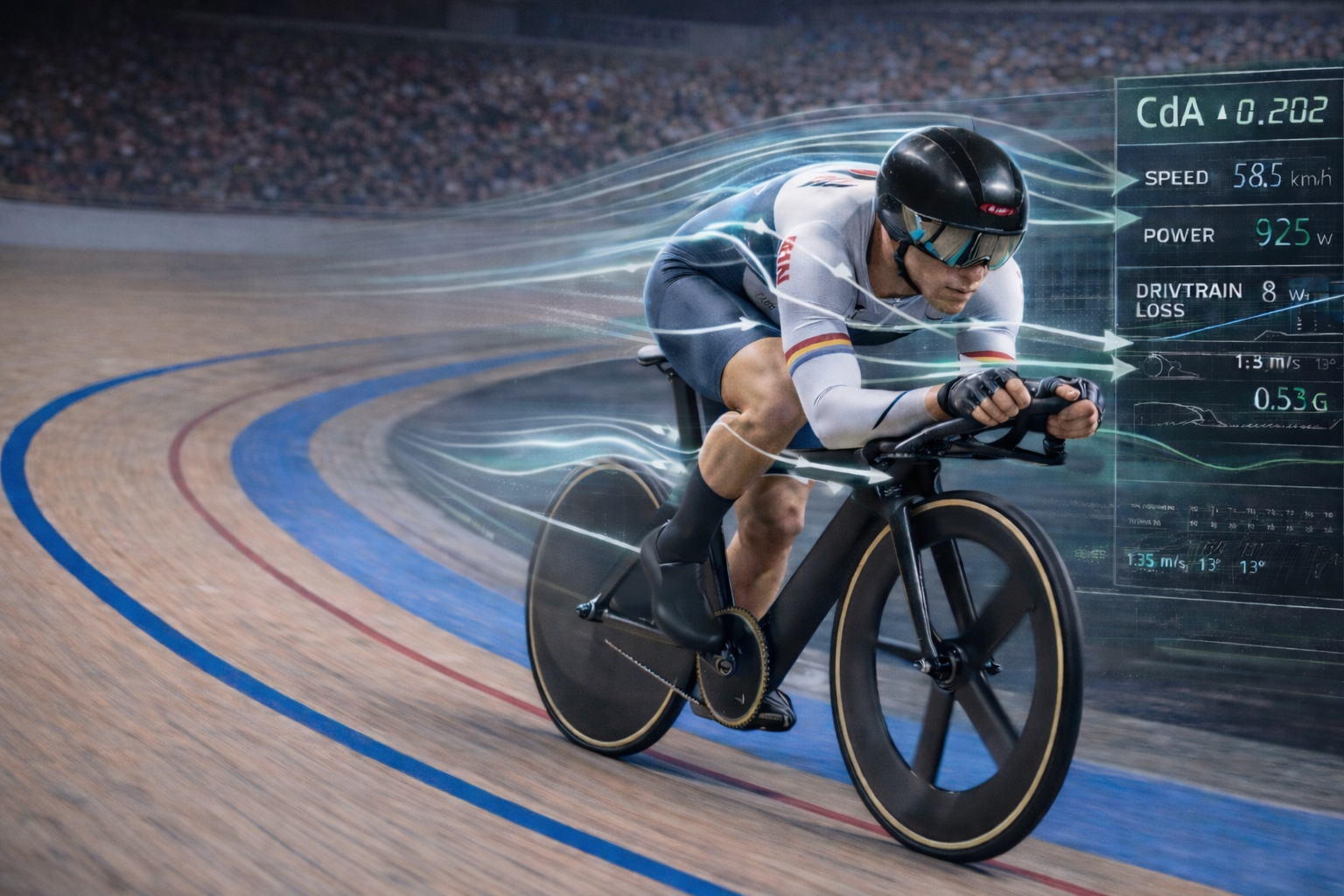
It has been far less comfortable applying the same precision to female physiology.
For too long, the menstrual cycle has been treated in one of two ways. Either it has been ignored completely, as though elite female riders should simply absorb symptoms in silence, or it has been reduced to a neat calendar model that tells every athlete what she should feel on the same day of the cycle.
Neither approach is good enough.
A track cyclist is not a 28-day chart. She is a high-performance system dealing with training load, sleep, stress, fuelling, travel, selection pressure, contraception, iron status, recovery and the normal variability of the body. Some riders feel strong during bleeding. Some feel flat around ovulation. Some have predictable symptoms. Some do not. Some cycles are regular. Some are not. The useful question is not, "What day is this?"
The better question is: "What can the rider produce well today, and what will it cost to ask for it?"
This series has been created to help riders and coaches move away from generic menstrual-cycle advice and towards a more intelligent, track-specific performance model. It does not argue for lower standards. It argues for better systems around the same standards.
The aim is not to soften the programme. The aim is to protect the quality of the work.
Elite track cycling is too demanding for guesswork.
A standing start exposes force, posture and commitment immediately. A flying 200 punishes poor timing. A team pursuit effort reveals whether a rider can hit speed, settle, recover and repeat. Keirin and bunch racing demand emotional control as much as physical readiness. The body has to be available, but so does the mind.
Menstrual-cycle symptoms can affect pain, sleep, appetite, gut comfort, mood, perceived effort, heat tolerance, fuelling, iron status and recovery. Ignoring those factors does not make a programme tougher. It makes it less precise.
The opposite mistake is just as damaging. A rigid cycle-based plan can become another blunt tool. It can tell a rider to rest when she is ready to train, or push when she is clearly not absorbing the work. It can create false certainty around physiology that is, in reality, individual and changeable.
Better performance guidance sits between those errors.
It asks coaches to read the rider, not just the calendar. It asks athletes to report useful information without feeling weak, awkward or medicalised. It asks programmes to build private, normal, adult systems around symptoms, training response and readiness. It asks everyone involved to understand that adaptation is not created by forcing the planned session at any cost.
The best riders do not need pity.
They need precision.
How To Use This Series
These guides are written for track cyclists, coaches, support staff and performance programmes. They are not medical advice, and they should not replace proper clinical support. Heavy bleeding, severe pain, irregular cycles, missed periods, persistent fatigue, low energy availability, contraception questions, iron issues and supplementation should be discussed with a qualified healthcare professional, sports physician or registered sports dietitian.
The performance principle across the whole series is simple:
Read the rider. Protect the quality. Keep the standard. Adjust the cost.
Each guide focuses on a different part of the cycle, but none should be used as a rigid rulebook. The value is in the thinking: what to monitor, what to adjust, when to push, when to hold back, and how to keep the rider progressing without pretending biology is either irrelevant or completely predictable.
Menstrual Phase
Menstruation is often treated as a problem to hide or a reason to automatically reduce ambition. Both views miss the point.
The opening days of bleeding can bring cramps, fatigue, poor sleep, gut discomfort, low mood and increased perceived effort. Some riders feel heavily affected. Others feel surprisingly clear and capable once the session begins. The performance decision should be based on readiness, symptoms, warm-up response and training quality, not assumption.
This guide looks at how to manage bleeding, pain, fuelling, iron status, recovery and mindset while keeping the standard high. It also explains why a reduced session can still be elite if it protects the quality of the block.
Read the guide: Menstrual Phase
Follicular Build Phase
After menstruation, many riders begin to feel more available. Energy can return. Mood may lift. Sprint intent, gym readiness and technical sharpness may improve. This can be a valuable training window, but it should not become an excuse for careless load.
The key line is: Use the window. Do not chase it.
This guide focuses on how to place high-quality sprint, gym, pursuit, bunch and tactical work when the rider is genuinely ready, while avoiding the common mistake of trying to catch up everything that was adjusted earlier in the cycle.
Read the guide: Follicular Build Phase
Ovulation Window
Ovulation is often described as a peak performance window. For some riders, it may feel that way. Confidence, aggression, sharpness and willingness to attack can all rise around this part of the cycle.
But confidence still needs discipline.
This guide looks at how to use potential high readiness without emptying the rider. It focuses on maximal work, tactical aggression, gym quality, fuelling, recovery and the risk of turning a good day into an expensive one. The aim is sharp execution, not emotional volume.
Read the guide: Ovulation Window
Luteal Management Phase
The luteal phase can be one of the most complex parts of the cycle for performance planning.
Some riders remain strong in the early luteal phase. Others begin to experience rising fatigue, poorer sleep, bloating, mood changes, cravings, reduced heat tolerance or a higher sense of effort. The mistake is to treat the whole phase as either fragile or irrelevant.
This guide focuses on managing volume, protecting intensity where useful, supporting fuelling and recovery, and using technical or tactical work intelligently when the body is less willing to absorb heavy load. It is not about stepping away from performance. It is about managing the cost of performance more accurately.
Read the guide: Luteal Management Phase
Irregular And Variable Cycles
Not every rider has a predictable cycle. Not every athlete ovulates consistently. Bleeding does not always mean the same thing. Symptoms can overlap. Travel, stress, contraception, low energy availability, illness and training load can all change the pattern.
This is where calendar-based guidance breaks down.
The irregular and variable cycles guide is built around a different idea: physiology first, calendar second. It explains how to use symptom tracking, traffic-light readiness, micro-windows, modular training options and coach-supported self-regulation to make better decisions when the cycle does not follow a neat model.
For many riders and coaches, this may be the most important guide in the series.
Read the guide: Irregular And Variable Cycles
Final Position
Female track cyclists do not need a softer version of elite sport.
They need elite sport to become more accurate.
A rider can bleed and still be world class. She can adjust a session and still be serious. She can feel sharp in one phase and flat in another without becoming unreliable. She can need medical support and still be robust. She can have an irregular cycle without being impossible to coach.
The role of a high-performance programme is not to force every athlete into the same calendar model.
It is to build a system that understands the rider well enough to place the right work at the right time, protect recovery when needed, and keep the whole block moving.
Track cycling rewards precision.
Female physiology deserves the same level of respect.